Innovations in gifting, architecture and property

Innovations in gifting, architecture and property

Knut R HolmøyCEO, Holmøy MaritimeFounded in 1973 in Norway’s High North, seafood group Holmøy Maritime prides itself on sustainable wild fishing – and great architecture. In 2014 it partnered with celebrated architecture studio Snøhetta to develop its headquarters in Vesterålen. A decade later, Snøhetta has delivered a 16,000 sq m facility at the fishery’s neighbouring Liland site, which will process 150 tonnes of salmon a day. The group’s CEO, Knut R Holmøy, tells us more.Why is it important for your company to invest in good architecture?It helps us to capture attention, attract expertise and create comfort and safety for those working with us. We offer the kinds of facilities that you might find in a city but with better views of Norway’s northern landscape.How does it affect your team?Our architecture shows that we prioritise quality. This gives our employees a sense of security and fosters pride. Nothing is achieved without human resources and, since moving our operation here, we have gained a lot in terms of efficiency for our investment.How do Holmøy Maritime’s values help staff?Our values revolve around sustainable production that’s both profitable and renewable. In this way, we can ensure safe and stable jobs, and acquire the expertise that we need to meet the environmental requirements that we face today, as well as those that we expect in the future.Retail: LondonPresent and correctChristmas is the busiest time of year at Colford. Founded in 2023 by Nathan Cole and Imogen Beresford, the London-based company sends out more than 5,000 intricately wrapped presents over the festive season. Catering to private and corporate clients including Hermès, Cartier and Soho House, Colford takes care of the entire gifting process, from selecting envelopes and commissioning calligraphy to packaging and delivery. “Luxury clients are always looking for new ways to elevate their brand,” says Cole. “They value our knowledge and guidance.”The couple created Colford to facilitate a more considered approach to gifting, free from the last-minute rush. “We love the concept of a slower Christmas, especially one without excessive plastic wrapping paper,” says Beresford. “We have been working with paper made from recycled beer grain,” adds Cole. “It’s material that’s usually wasted after the brewing process. It creates a beautiful texture and subtle colour changes: you get some rich, deep browns through to the palest beiges.”Colford takes pride in sourcing unusual materials and gifts, and works with more than 200 designers and makers. Creating a link between craftspeople and clients is important to the pair, who insist that gifting excellence doesn’t have to end with the festive season. “We can add a theatrical element all year round,” says Cole. “We consider how the present arrives, who delivers it, what they’re wearing and even what vehicle they arrive in.”Hot propertiesDavid Barry was the leader of the 2012 US Olympic wrestling squad, so he knows how to grapple with risk and tackle opportunity. It’s a skill set that has served the founder and ceo of property-development firm Urby well throughout his business career. Barry is also an angel investor who has backed Peloton, the Standard Hotels group and others. “Passion and strong values are what I look for,” he says. “These are often found in hospitality brands.”Urby’s residential apartments offer a blend of traditional city living and the hospitality flair of boutique hotels. Since launching the company in 2014, Barry has worked to foster a sense of community in his developments. “We all rely too much on social media,” he says. “We need to return to humanity and cultivate real interactions. One way that we do this is by integrating a café into our lobbies.”Urby now has eight properties across the US, in cities including Dallas and New York. Four more are in development. “The apartment world has often been dominated by financial interests and generic values,” says Barry. Urby’s generous amenities, such as communal gardens, gym classes and terraced pools, challenge this. Next, Barry hopes to expand across the border. “I would love to head to Mexico City,” he says. “It’s a vibrant city that’s bursting with creativity and Urby would thrive there.”For more on brand builders you should know, tune in to Monocle Radio’s weekly show and podcast ‘The Entrepreneurs’.

Sticking around: How the Post-it changed the way we work

Sticking around: How the Post-it changed the way we work

The origin of sticky notes is the stuff of r&d legend. Spencer Silver was a research chemist at 3M, the Minnesota-based industrial and consumer products company, seeking to concoct an adhesive strong enough to hold airplane parts together. Instead, in 1968 he developed acrylate copolymer microspheres, a sticky adhesive that came off surfaces easily and didn’t leave residue. Silver evangelised his invention within 3M and patented it in 1972 but no obvious commercial application emerged. Another chemist learned about Silver’s adhesive and thought it would make for a handy bookmark. The eureka moment had come, and 3M launched the Post-it Note in 1980.In the 40-plus intervening years, 3M has sold billions of sticky notes and manufactures enough of the paper each year to reach the moon and back 13 times. The product has twice the brand trust as its nearest competitor, according to surveys. While the original 76mm by 76mm squares in canary yellow continue to be the top seller, Post-it Notes now come in more than 500 variations in 26 colours.Sticky notes have ardent fans across all disciplines and ages. But Adrienne Hovland, who was until recently global portfolio director for Post-it Note, finds designers the most dedicated. “I feel like a celebrity when I walk into a creative agency or design studio,” she tells monocle. Digital competitors haven’t put a significant dent in the sticky note’s appeal and Hovland attributes the paper Post-it Note’s longevity to simple human cognition. “There’s something about being able to see it all in front of you that clarifies what you need to do, how you want to group things and where you need to go next,” she says. “That’s inherently why they endure with the design community.”Monocle spoke to four US creatives with a professed love of sticky notes about how the humble product helps them bring thoughts to life, convey ideas to clients and keep them organised.1.Jenny and Anda FrenchThe architects, BostonHow do you get about 50 households to agree on a design for their future home? With sticky notes, of course. Jenny and Anda French, who together run Boston-based architectural practice French 2D, took on the ambitious task of designing a co-housing building in Massachusetts. The clients consisted of a range of potential residents, from baby boomers to millennials, who all agreed that they wanted to live together in individually owned flats with private kitchens and living rooms that are attached to a common house with a larger kitchen, dining room, music space and garden.Translating this into concrete and wood, however, meant securing consensus on every detail. So the team devised a traffic signal-esque colour-coded sticky-note scheme of green, yellow and pink Post-its that were distributed to the 30 households. Everyone also received a single blue sticky note to signal exceptional approval of a design option.“This is your voice and this is how we can see all of your voices together,” says Jenny (pictured, on right, with Anda) of how they described the scheme to their clients. The process helped the group to choose the building’s design, from its shape, unit types and common spaces to the materials used and  connections to outdoors. The green and yellow notes illustrated sufficient consensus to move on without wasting time, while the hot pink notes created an instant “red light” moment for the group to hash out their differences in real time.It took 12 workshops and seven years to bring the 30-unit project to fruition. But when the residents moved into their new homes in 2023, they had the satisfaction of knowing that both they and their neighbours fundamentally agreed on every detail – any leftover hot-pink sticky notes could be drafted for grocery lists instead.2.Mario GarcíaThe media strategist, New YorkCuban-American journalist Mario García is a highly sought-after design and editorial consultant who works for various media outlets around the world. He advises the likes ofThe Timesin the UK, Singapore’sThe Straits Times,Der Tagesspiegelin Germany, andKhaleej Timesof Dubai, on how to improve their mobile storytelling offerings.Whichever newsroom he lands in, however, must provide one simple tool that is absolutely essential for him to run his workshops: sticky notes. That’s because he trains his clients on how to deploy visual assets in a mobile story – where to intersperse videos, photos and graphics with text – by mapping them out with sticky notes, preferably the yellow ones. He picked up the technique from a New York Times staffer who became one of his graduate students at the Columbia University School of Journalism.“Sticky notes are a functional way for a journalist who normally works with words to understand how visuals can become like paragraphs that advance the story,” he says.To illustrate his point, García explains that the average time readers spend on a mobile story clocks in at 30 to 33 seconds. So an outline with 15 sticky notes – representing 15 different assets – makes it clear that some of the visuals need to go, or readers are unlikely to scroll through the story until the end. “Sticky notes help you see where you are with visuals.”3.Marta BernsteinThe graphic designer, SeattleA potpourri of typefaces articulating various building names, directions, department titles, exhibition descriptions and other bits of information adorn signs of different shapes and sizes inside Studio Matthews, a Seattle-based design practice. Italian graphic designer Marta Bernstein has had her hand in many of these projects as the firm’s co-creative director.When Monocle visits, Bernstein is fresh off a meeting with a neighbourhood business improvement district and is peering over a clutch of sticky notes in orange, yellow, pink and light blue affixed to a map. Each refers to a local landmark with text jotted down explaining the location’s significance. This early-stage information-gathering workshop was designed to inform the direction of travel for an as-yet-undefined project – the end result might be wayfinding signage, informational maps or a local history kiosk.For Bernstein, having the client huddle over a physical map rather than collecting ideas to type up on digital charts is vastly preferable. “People are looking at things instead of doing things,” she says. “The fact that people are standing, writing and physically moving in the space makes them way more engaged than just sitting and looking at a screen where someone is adding input.”Bernstein says that four colours are the maximum she’ll bring to an engagement; more than that and any colour-coding scheme begins to fall apart. monocle peers inside the studio’s supply drawer where sticky notes – all Post-it brand, in a mix of 76mm by 76mm square and memo-sized – are neatly arranged. The latter are particularly useful for intraoffice communication. “It’s nicer to leave a sticky note on someone’s desk than to send them a Slack message,” she says.

How Europe’s tech sector is quietly gaining ground

How Europe’s tech sector is quietly gaining ground

Europe is often portrayed as a tech underdog, lacking a single giant firm of the calibre found in Silicon Valley. In February, during an AI summit in Paris, US vice-president JD Vance poured scorn on Europe’s regulatory regime, arguing that it stifles progress. But all that is to miss the bigger picture: there are companies across the continent proving their competitiveness; you just need to know where to look. In northern Italy, Ephos is developing energy-efficient photonic chips that use light instead of electricity for data processing. Unlike traditional chipmakers, it focuses on glass-based technology, which is touted as being more energy-efficient than silicon chips, especially in the resource-intensive demands of AI and quantum computing. The company recently secured $8.5m (€8m) in funding and opened the first glass-based quantum photonic circuit facility in Milan’s Innovation District. In a recent edition ofThe Entrepreneurson Monocle Radio, CEO Andrea Rocchetto admits that Europe has been a bit slow out of the blocks.Andrea Rochetto, CEO of Ephos.“We need a shake-up, no doubt, but negativity isn’t helpful,” he says. “Change will come from working with the US and embracing a more global outlook.” Ephos has a broad range of investors, with major support from the US and partnerships with organisations such as Nato; it is proof that Europe remains a strong and innovative player. “Barriers to collaboration are rising but we can’t compete with the US and China in isolation,” says Rocchetto. Indeed, as Silicon Valley increasingly throws its lot in with the Trump administration, a backlash to these tech giants is growing. In this more uncertain world, Europe has an opportunity to strengthen its own ecosystem and become more competitive if it’s willing to seize the day. For more visionary ideas, listen to ‘The Entrepreneurs’ on Monocle Radio, or download the show as a podcast on Spotify, Apple Podcasts or wherever you get your audio.Want more stories like these in your inbox?Sign up to Monocle’s email newsletters to stay on top of news and opinion, plus the latest from the magazine, radio, film and shop.Your EmailSubscribe

Why the airship industry is on the rise again

Why the airship industry is on the rise again

You would be forgiven for thinking that the bubble had burst on the airship industry. Finnish company Kelluu, however, remains loyal to the sector. Based in Joensuu, eastern Finland, it operates what the company calls “the world’s largest airship fleet” and has a clear business case, as CEO Janne Hietala explains.“We operate in a niche between drones and aircraft,” he says. “The former have a short flight time, while the latter are expensive, environmentally harmful and fly above the clouds.”For what Kelluu does with its airships, clouds are a problem. Its business is imaging and instead of flying people from place to place, Kelluu’s airships photograph the Earth. With state-of-the-art cameras, they can capture incredibly detailed photographs of a wide area. “With just five of our airships, we are able to photograph the entirety of Germany with a level of accuracy that no satellite can match,” says Hietala.In addition, its cameras can provide hyperspectral imaging, which its clients can use to monitor metrics such as humidity and temperature. The images can also be used to construct detailed 3D maps, or what the company calls “digital twins”. Clients are diverse and range from forestry companies that are keeping an eye on the health of the land and power companies monitoring the state of its lines in remote locations to urban planners who need to know how the traffic is flowing. The market that Kelluu is set to revolutionise is large. According to Hietala, the annual cost of monitoring critical infrastructure, such as electricity networks, is approximately €60bn globally.“No other technology can achieve the same level of efficiency as airships can,” says Hietala. In an increasingly environmentally conscious world, the fact that Kelluu operates the airships with hydrogen, and thus without emissions, is another factor in its favour.Hietala likens the company’s airships to satellites orbiting Earth. Unlike drones or helicopters, the airships don’t need human pilots and can be programmed to cover a certain area. “Their flight time is about 12 hours and all we need to do is have a flight-control centre that tracks where they fly,” he says.But it has not always been smooth sailing, or floating, for Kelluu. It is doing something totally new and regulators are still playing catch-up. “All of our pilots have licences and have been trained to communicate with other air traffic,” says Hietala. “But sometimes the regulators still think that we just fly drones.”The company’s airships usually fly at a maximum altitude of 150 metres and because of their snazzy silver bodies have startled the occasional onlooker more than once. “Quite often people call the energy number and claim to have seen a UFO,” says Hietala with a laugh.kelluu.comOther airship firms on the rise:1.LTA (Lighter Than Air)Research, founded by Google’s co-founder Sergey Brin, is building next-generation airships for human transportation.2.UK-basedHybrid Air Vehiclesis developing passenger zeppelins that can stay airborne for up to five days and have a range of 4,000 nautical miles.3.Flying Whalesis a French company developing cargo zeppelins that can carry up to 60 tonnes.

Keeping it real: Why meeting prospective employees in person yields the best results

Keeping it real: Why meeting prospective employees in person yields the best results

The job interview’s reputation is almost universally negative. But outside of TV sitcoms, are old-fashioned, in-person meetings with prospective employers ever that bad? The alternatives certainly are. As with so much else from the analogue world, we might already be suffering from the job interview’s increasingly endangered status. When UK-based recruitment consultants CV Genius surveyed 625 hiring managers on what they look for in a successful job application, 80 per cent responded that they couldn’t stand AI-generated applications. But there’s a trusty implement in the recruiter’s toolbox that can save us from hiring the wrong candidate: meeting them in person.The consequences of letting someone get too far into the job-application process without having met them are obvious. Not only does an AI-generated CV and covering letter give the employer no idea whether the candidate’s self-professed acumen stands up to scrutiny but they also offer little indication of the personality type that could be about to enter your working life.It’s time that we scotched the encroachment of AI into the hiring process by reviving mandatory, in-person job interviews and holding them as early into proceedings as possible. They might be stressful for many candidates and time-consuming for bosses but they also reduce the chances of hiring someone who has been dishonest in their application. They are also a vote in favour of that increasingly rare but precious element of the working day: human connection.It doesn’t matter how gleaming someone’s written job application is, whether it’s bot-created or not. You simply can’t get a full measure of a candidate without spending some time together. Not only does the employer get an insight into an applicant’s acuity, style and sense of humour but the candidate, in return, gets to find out the same things about their prospective boss too.AI has become worryingly adept at gaming written job applications. Generic questions such as, “What can you bring to this role?” and, “What do you consider your strengths and weaknesses?” are catnip to bots. To vet potential employees properly, all predictable elements of job questionnaires should be expunged. The requests should be so specific that AI will wither on the digital vine. It would be difficult for a candidate to use Chatgpt to answer a question such as, “Please could you illustrate an example, directly referencing your previous position, of when you solved a problem, detailing the specifics of the situation and giving us a step-by-step narrative of your response to it?”AI is problematic in other, more disturbing ways. A University of Washington study published in 2023 tested three large-language AI models by making them evaluate hundreds of CVs against job descriptions. They found that the models favoured CVs from candidates with white-associated names 85 per cent of the time – and preferred other candidates to black men 100 per cent of the time.The endgame of this reliance on AI will be horribly retrograde. Successful candidates will be chosen based on whether they are the most clued up on how to use the technology to their advantage. There is also the risk that bosses will simply become distrustful – and heartily bored – of the entire process and give the job to someone in their social network. Goodbye, meritocracy.So, if we really want to hire the best candidate for the job, we need to tidy our office desk, find another chair, take a coffee order and usher in the first of those aspirant future employees.

Aviation updates: Greenland opens for business while South Korea spends big on defence

Aviation updates: Greenland opens for business while South Korea spends big on defence

New York’s seafood fans and Icelandic hoteliers can both expect to feel an effect now that Nuuk, Greenland’s capital, has an international airport. Larger planes, such as Air Greenland’s Airbus a330-800, can now fly to the southwest coast of the self-governing territory, which – despite Donald Trump’s recent bluster – is part of the Kingdom of Denmark. Previously, travellers to Nuuk had to stop, often overnight, at Keflavík in Iceland or at Kangerlussuaq, the former US air base in Greenland. Twice weekly flights to New York (a mere four hours away) with United Airlines, and to Copenhagen three times a week with SAS, are scheduled for take-off this year.This being Greenland, wider geopolitical factors have played a part in the new dkk2.5bn (€340m) airport, the country’s largest-ever infrastructure project (which will open shortly before another airport at Ilulissat, 500km north of Nuuk). In 2018 a Chinese construction company had expressed an interest in building the airport but the Danish government stepped in with partial funding and as guarantor on a loan.The airport is likely to have a significant effect on the country’s fishing industry, which is hoping for an export boost from sending fresh produce to New York, and on tourism: visitor numbers are expected to almost double to 105,000 during the summer. Nuuk’s location is, however, more vulnerable to the weather than Kangerlussuaq, so visitors might still have to enjoy the occasional overnight stay in the departure lounge.In the basketFour Boeing E-7 Wedgetail early warning and control aircraftWho’s buying:South KoreaWho’s selling:The USPrice:$4.9bn (€4.7bn)Delivery date:tbcFor obvious reasons, South Korea spends big on defence – $45.2bn (€43bn) in 2024, which is projected to swell to $54.7bn (€52bn) by 2029. Even amid that largesse, this is a significant purchase. The e-7, based on the 737 airframe, is an upgrade on Boeing’s venerable e-3 Sentry, replacing the e-3’s revolving roof-mounted radar dome with a rectangular monolith with superior capabilities. The Northrop Grumman-made sensor can furnish a constant picture of target movements, rather than intermittent glimpses as the radar rotates. The E-7 is also operated by the US, UK, Australia and Turkey. South Korea already flies four E-7s and will be hoping that this doubling of the complement will bolster its ability to keep eyes on its volatile northern neighbour.

Why one unassuming US grocery chain is a perfect lesson in the power of community building

Why one unassuming US grocery chain is a perfect lesson in the power of community building

Stewart’s is a chain of 400 convenience stores across New York state, New Hamp­shire and Vermont that seems to appeal to everyone. It’s where contractors grab coffee at dawn (some branches open at 04.30); where people in retirement go to buy the paper; and where Daniel Day-Lewis is rumoured to grab an eggwich (four million-plus sold in 2024). When my Brazilian friend visited from São Paulo, she declared Stewart’s “the best hangout in town”.With burgundy branding and beige interiors, little about Stewart’s has changed in 50 years. So unwavering is its identity, it now feels dependable, trustworthy, familiar and oddly comforting – a cultural glue. A Stewarts Shops convenience store and gas station in Northville, USA.Starting as a family-owned dairy nearly 80 years ago, Stewart’s has been built by the Dake family into an $877m (€806m) empire pulling in $2.5bn (€2.3bn) in annual revenue. Forty per cent employee-owned, with a workforce that stays, Stewart’s thrives on relationships and vertical integration – farms that are just 20 minutes from its plant. The eggs are fresher and cheaper than any neighbourhood shop, while the milk, which goes from farm to cooler in 48 hours, has been rated the best in New York state.So what can upmarket grocers take from Stewart’s? Stop chasing reinvention, trends, influencers and “new arrival” products. No one goes to Stewart’s for the aesthetics but the food is consistent, fresh, delicious and affordable; the coffee is hot, the eggs are cheap and the milk tastes better than at your average health-food shop. Its employee stock programme has minted 199 millionaires. Stewart’s, with its unshakable presence and consistency, has managed to stay unremarkable yet essential.Gardner founded ‘Modern Farmer’ magazine and is Monocle’s former Americas bureau chief.Want more stories like these in your inbox?Sign up to Monocle’s email newsletters to stay on top of news and opinion, plus the latest from the magazine, radio, film and shop.Your EmailSubscribe

Interview: Alpine CEO Philippe Krief’s driving ambition

Interview: Alpine CEO Philippe Krief’s driving ambition

Waiting at a red light is a rather dull occasion – but not if you’re at the wheel of an Alpine A110R and it happens to be playtime for the children in a nearby schoolyard. Then it becomes a moment of happy pandemonium, as excited faces swarm the fences and thrilled shrieks fill the air. As Monocle experienced on a recent drive just outside Paris, little can diminish the thrill of driving this diminutive sports car.Alpine has been part of Renault since 1973 and is best known for its achievements in 1960s and 1970s motor racing. After remaining dormant for more than a decade, it was revived with a concept car in 2012; this led to the launch of the A110 “berlinette” five years later, attracting plenty of buzz. Then, in 2021, Renault rebranded its Formula 1 team as Alpine. With the release of a slew of limited editions and faster variants, commercial success was assured: Alpine sold 4,328 a110s in 2023, making it the bestselling two-seater sports car in Europe.With the EU’s effective ban on new combustion-engine cars coming into effect in 2035, Alpine is now embarking on a major transformation. By the end of the decade, it hopes to offer a full range of electric vehicles (EVS) and reach revenues of €8bn. This expansion began with the unveiling of the Alpine a290 last summer – a sporty riff on the Renault 5 that will start deliveries in early 2025.At the latest Paris Motor Show, Alpine’s CEO, Philippe Krief, set out the next steps of his plan, previewing the Alpine A390 Beta concept car, an electric SUV. Here, he tells Monocle about the road ahead.Tell us about this new era for Alpine.Our plan is to make six or seven vehicles by 2030, with an expansion into Asia and the US. We’ll have about one new car per year and the models will fall into two pillars. The first is that of two-seater sports cars, such as theA110 – maybe a two-plus-two-seater too. The other will be cars designed more for everyday use but still linked to the brand in terms of sportiness, exclusivity and strong design. The A290, the A390 and probably a future third car will fall into that pillar.What guides you as you evolve into a global, all-electric brand?When you know where you come from, you know where you’re going. Alpine’s founder, Jean Rédélé, was one of the only creators of great automotive brands not to name his company after himself. He called it Alpine to express the feeling of driving along winding roads in the Alps. All of our models have exuded this feeling of lightness, this pleasure, this simplicity of driving. On the other hand, if we want to establish ourselves in a robust, lasting way on the market, we have to increase our penetration a little bit, in terms of customers and markets. The key is to transcribe our DNA into all of our vehicles, especially those with broader appeal, and sprinkle them with French know-how, elegance, exclusivity and luxury.What are the key challenges when it comes to creating a battery-powered vehicle that invokes all of these things?A sports car is a car that responds well to all of the inputs of the steering wheel, accelerator and gearbox, and gives you a certain acoustic emotion. Electric technology ticks a few of those boxes but there are lingering questions about response time, lightness and acoustics. When it comes to response time, it’s possible to give an EV a completely natural behaviour through the integration of batteries low enough on the car to bring down the center of mass, and so on. The A390 that we are developing demonstrates this: it will have three motors, one at the front and two at the back. We have proof that we can give the perception of lightness despite the weight of the batteries.The second aspect is the acoustics. Simply reproducing the sound of a combustion engine would be easy but that would amount to a refusal to enter this new era. The objective is to make the harmonics of the electric motor audible, so that you can sense the car’s behaviour through its sonic feedback.A290 in figuresBattery range:380km0km/h to 100km/h:6.4 secondsSeats:5Boot capacity:326 litresPrice:From €38,700As you expand into a global brand, will you stick to your model of producing all of your vehicles in France?We will take it step by step. The A290 is produced in Douai; the A390 will be produced in Dieppe, just like the A110. So, for the moment, we are in France, both in terms of production and development. But we’re in the process of expanding our network all over Europe. We will tackle Asia too and distribute our cars there less discreetly than we do today. We sell the A110 R in Japan but it’s still quite limited.How does motorsport fit into Alpine’s new plans?It remains important to us. Alpine’s DNA is motor racing. It’s also a key brand vector and we use motorsport to make ourselves better known. Plus, it’s one of Alpine’s roles in the Renault Group to be at the vanguard when it comes to innovative technologies.You’re the CEO of Alpine but also the technical director of the Renault Group. How do you see the role of software in the automotive industry?The software revolution is, above all, a hardware revolution. Ever smaller and more capable microprocessors have made it possible to integrate supercomputers into vehicles. About 10 years ago, there were 60 to 70 “little brains” inside a vehicle.Today we have three or four – even small supercomputers that manage everything. So we can be more responsive when we make a modification and be completely in control of what happens. Controlling three motors on a car almost in real time to make its behaviour smoother is no longer science fiction. That’s how we’ll ensure that a bigger car can offer the same feeling of lightness as an A110.Car enthusiasts can be sceptical about technical innovations. How will you convince them to go electric?We won’t force them. A few years ago, steering on cars was manual, so there was no assistance on the steering. When we switched to hydraulic power steering, there was pushback. But after a short while, it was over. Then we moved on to electric power steering. Again, people said, “Oh là là.” Now few still complain about it, as we kept the advantages of the old technology but added something. Here, it’s the same thing: we’ll keep the advantages of a sports car but add the more serene atmosphere of an electric car. And we’ll add performance that is incredible because the power density of an electric motor means that it uses less space and has much more force. Even the enthusiasts will appreciate it.Alpine’s milestonesFounded:1955Renault becomes majority shareholder:1973HQ:Dieppe, the birthplace of founder Jean Rédélé2023 sales:4,328 carsNotable motorsport milestones:World Rally Constructors Championship winner, 1973 (A110)24 Hours of Le Mans overall winner, 1978 (A442 B)Formula 1 Hungarian Grand Prix winner, 2021 (A521)

How banning vehicles is transforming Tempe into the US’s most walkable city

How banning vehicles is transforming Tempe into the US’s most walkable city

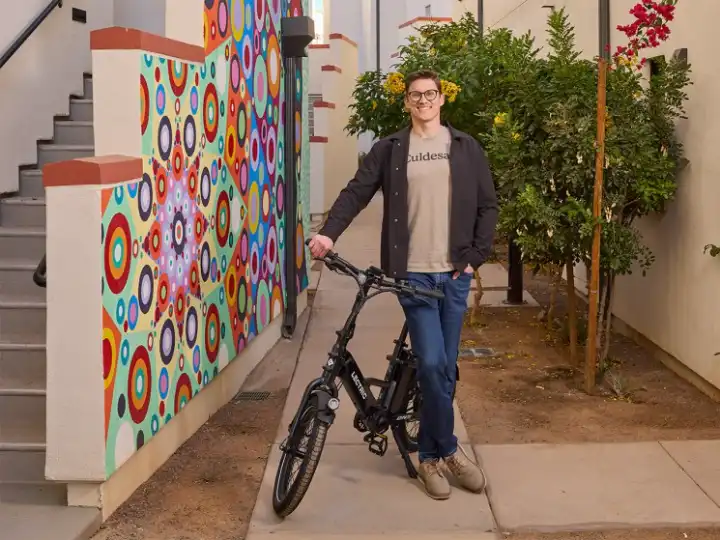
Late last year, Gabriela Vargas was apartment hunting with her husband in Tempe, a midsized city in Arizona, when she came across a new development called Culdesac. “I fell in love with the layouts,” she says, sitting in the complex’s beer garden. As they were about to sign the lease, her husband asked her what they would do about their car: the lease specified that Culdesac was a walkable community with no provision for parking. As the mother of a two-year-old with another child on the way, Vargas was reliant on their vehicle. “OK,” she said, “let me think about this.”It’s a decision that most Americans never have to make. According to data from the US Census Bureau, 92 per cent of households in the country owned at least one car in 2023. Nationally, there’s an estimated seven parking spaces for every automobile. Meanwhile, only 12 per cent of residential blocks are in walkable neighbourhoods.Culdesac co-founder and CEO Ryan JohnsonRyan Johnson, the co-founder and ceo of Culdesac, says that the development is “the first car-free neighbourhood built from scratch in the US”. When it opened in May 2023, Johnson was its first resident. About half of the seven-hectare site has since been developed; when all 760 units are completed, Culdesac will be home to about 1,000 people. It’s fast becoming a proper community and a prominent case study for a style of living – walkable and less reliant on driving – that opinion polls show is desirable among buyers but is vanishingly rare in the US market.According to Johnson, among the reasons why there aren’t more walkable neighbourhoods is that zoning mandates have separated the places where people live from where they work and shop; meanwhile, rules for “parking minimums” have created islands of developments surrounded by vast car parks. It’s almost “illegal to build them”, he says. Culdesac obtained exemptions from sympathetic city officials.Apart from an area near the entrance that accommodates visitors’ vehicles, there’s “not a drop of asphalt” on the site, says Johnson. Instead of conventional streets, little paths of crushed gravel lined with cactuses and succulents wind between the low-rise buildings, which are painted white to reflect the sun. The structures are also set close together to provide shade, which is welcome in a state where you can expect more than 300 days of sunshine a year. Meanwhile, packages and letters are delivered to postboxes near the gym, rather than to residents’ front doors. This has led to plenty of spontaneous socialising as people pick up their mail. “A lot of Americans want to live this way,” says Johnson. “It is legislation that holds them back.”For Europeans familiar with Italian village squares or Dutch woonerfs, what’s happening in Tempe might seem unremarkable. But in the US, where a third of Sun Belt cities are covered in car parks (with their attendant “heat island” effects and flood risk), this looks like a quiet revolution. Creating walkability in US developments often requires extensive retrofitting or building from the ground up – even if the bones of an older, more pedestrian-friendly urbanism are still there, buried beneath years of car-centric planning. Culdesac is now bringing a version of its Arizona model to other states across the US, while similar pedestrian-focused communities are popping up in Texas and California.For Vargas, who ultimately signed the lease, other benefits have more than made up for whatever she lost from giving up her car. She says that there’s a feeling of connectedness at Culdesac, where residents participate in everything from outdoor markets to Friday-night cornhole games.Residents receive an e-bike from LectricWhile there are whispers that a few of the residents keep cars off-site, the people who Monocle speaks to say that they rely on a variety of transportation options to get around. Most notably, there’s the light rail system, with a stop just outside the complex (Culdesac successfully lobbied Phoenix City Council for discounted passes for residents). The first 250 residents were given an e-bike from Lectric, one of the US’s largest manufacturers, which is headquartered in the Arizonan capital. There are discounts for Lyft’s ride-share cars while, for grocery-shop runs, an electric vehicle in the car park can be rented by the hour. Mobility “isn’t just about how a person gets around but how things get to them too”, says Johnson. Culdesac residents are “power users” of delivery services such as Instacart.All of this is a boon to residents such as Electra Hug, a 24-year-old high-school guidance counsellor who has a very real need for car-free living. “I lost my vision at 16 and have never had the opportunity to drive,” she tells Monocle. She moved to Tempe from her home state of Michigan (“Everything back there is just cars and highways”) in search of freedom and independence. “I wanted to be able to do things on my own terms,” she says. For her, that meant easy access to light rail and Culdesac’s other transport options. While the car has long been a symbol of freedom and independence in the US, Culdesac offers an alternative vision: freedom from owning a car, the independence to get around in other ways.Electra Hug crossing the road that runs beside CuldesacDespite Culdesac’s futurist zeal, much of it is arguably a throwback. The light-rail line that runs outside the complex recalls the Phoenix Railway Company, a streetcar network that ran in the city until 1947 when it (and similar systems across the US) was scrapped in favour of automobile-oriented development. Culdesac’s mix of housing and retail, its “gentle density” and desire to create moments of neighbourly serendipity come from the postwar playbook of one of Johnson’s heroes, urbanist Jane Jacobs, who eschewed large-scale planning in favour of a more organic approach, comparing city street life to a “ballet” full of improvisations.So far, it seems to be working. One measure of that success is all of the development that’s taking place in the surrounding area. “People want to live in a walkable neighbourhood and they also want to live next to one,” says Johnson. But David Levinson, a professor of transport at the University of Sydney, believes that projects such as Culdesac will be hard to expand widely in the US, more because of “in-built market preferences than regulations, though these matter too”. Still, he says, “I like market-based experiments and it will never expand widely if it is never tried.”Culdesac in numbers760 units will be on-site once construction is complete.1,000 residents will eventually live here.2018: The year in which Culdesac was founded.$200m (€191m): The amount that was raised to build the mixed-use neighbourhood development.150 parking spaces are available for use by visitors.The promise of Culdesac, as well as its potential limitations, can be seen in a new project not far down the road in Mesa. Site 17 is a notoriously bleak area that has been vacant for decades. The company has inked a deal to redevelop it into 1,000 residential units and up to 4,645 sq m of retail space. This proposal is not car-free but “car-lite”, with just 800 proposed parking spaces. On the other side of the country in Atlanta, the company has two “pocket-neighbourhood” townhouse projects under way. It had also been tapped for the redevelopment of an eight-hectare  site adjacent to the city’s Beltline, a 35km loop of connected walking and biking trails, but the agency funding the project recently pulled out.Property development is already a tough game and swimming against the current can make the task feel Sisyphean. Yet Johnson is undeterred. He tells Monocle that he used to get “laughed out of the room” for his vision of car-free living but, these days, he’s invited to conferences where developers listen receptively when he tells them, “Building structured parking is a mistake.”There will be 760 units at CuldesacSome wheels are allowedThe transition from car dependency to walkability won’t happen overnight, he says, but prioritising motorists isn’t the best investment in the long run. He gestures broadly at the community forming around him in the desert. “This is something that’s built for where things are going,” he says. “It’s built for what people want.”culdesac.com

10 hard-earned business lessons from car salesman Patrick Moylett

10 hard-earned business lessons from car salesman Patrick Moylett

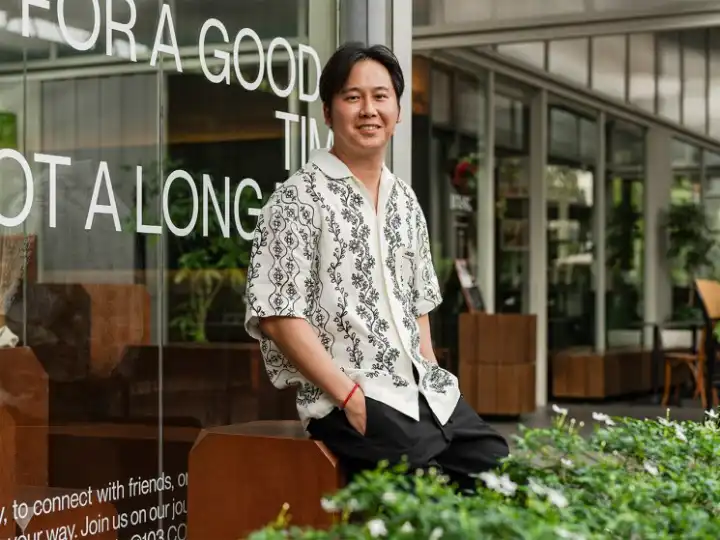
Patrick Moylett is director of Harrington’s of Fulham, a used-car dealership in west London. He has also found success selling tweed, property and condoms. Here he shares 10 of his top tips.1.In the beginning, sell quickly and…When I was in property, I noticed that customers were slow to pay because negotiations took so long. If the setting-up costs are too big, you might become one of the 60 per cent of new businesses that fail. So I moved into selling cars: buy them, do them up, sell them. There’s instant reward.2.…buy cheapIn the mid-1980s I noticed that old Jaguars were quite cheap so I bought two to get started. I drove from London to Normandy in one and in Paris I stopped at an antiques shop. When I returned to the car there was a man waiting who wanted to know if it was for sale. Parisians loved the old Jaguars so I started driving to Paris once a month in one and parking it on the Champs-Élysées with a “For sale” sign on the windscreen. I made a lot of money.3.Decide whether you’re a lone wolfAs I was starting out, I thought, “I want to do this alone”. That’s just the way I am. Other people work better with partners. It helps if you realise this early on.4.Selling is easier if you don’t have to explain thingsTake an existing product and market it for a new use. Marketing is the most expensive part of a young business. I started selling condoms during the Aids crisis, when their use was still considered largely contraceptive. I marketed them as a prophylactic but didn’t have to spend much on explaining what they were – most people already knew.5.Spot opportunity abroadWhen I was in France at the age of 18, I realised that every apartment door had a spy hole, which they didn’t have in my native Ireland at the time. So I bought 3,000 of them and took them to Ireland in a box and went door to door in Dublin selling them.6.Look at horizontal ways of sellingAfter I started my condom business, Red Stripe, I began thinking about how the idea of protection could apply to other products. So I started selling Red Stripe-branded cycle gear and rain protection.7.Follow your joyThe use of condoms was still very controversial when I was getting into the business – Ireland was very conservative at the time. My girlfriend’s family was strongly against it. So I drew up a list of pros and cons. The con list was very long and the pro list had just one thing: I enjoyed it. So I decided to continue.8.Get out thereI was in the lobby of the Time Out offices in London when I overheard two journalists talking about a condom shortage. I told them that I had a business and asked whether they would interview me. I restarted my business the next day and was on the cover of Time Out. It was invaluable publicity.9.Choose the right nameWhen I bought my first car showroom, I called the company Harrington’s of Kensington, even though it was just a railway arch in Ladbroke Grove. I wanted people to associate the brand and the cars with an expensive area of London.10.Learn how to read peopleAs soon as someone comes into my showroom, I can tell whether they will buy a car from what they say and do. I’ve saved a lot of time by not chasing lost causes.

Supermarkets have lost their charm. How can we make them better?

Supermarkets have lost their charm. How can we make them better?

At their best, grocery stores are engines for neighbourhoods and platforms for smaller, honest and interesting businesses. By stocking great produce, they boost cottage industries, help local farmers and artisans while delivering the best options for their customers. An excellent grocer’s offers a place to meet, ideally with a café for mingling. Good ones are also sensory experiences. Great ones combine familiarity and personal service. Sadly, many supermarkets have become utilitarian and samey – even dystopian in the impersonality of their self-checkouts. Monocle has written about retail since we launched more than 18 years ago. We also have shops and cafés that show how we like to do things. So let us share some ideas about a shopping format that’s ripe for reinvention.1.Work from the ground upDo away with drab grey lino-like floors or pebbledash plastic and opt for a material that speaks to the calibre of what’s for sale. At Paris’s La Grand Epicerie Rive Droit, a masterclass in food retail owned by luxury group LVMH, there are heavyset stone tiles in the fromagerie, wooden parquetry in the delicatessen and luxurious marble in the ready-made section. The fishmonger is a mosaic-filled tribute to the sea’s bounty.Together, these combine to create the atmosphere of a department store for delectables that invites shoppers to stay, browse and pick up a few treats (bonus: it’s also easy to clean if there are spills). For more inspiration, look to Grandiose, a chain of supermarkets in the uae, which also uses different flooring to frame its products by type and region. 2.Hire a shop-friendly architectFrom the height of the shelves to the clarity of the signage, supermarkets need to be functional in design. But they can also draw on a few ideas from luxury retail spaces, such as the use of natural light and the flow through the space. (See the work of Los Angeles and Lausanne-based architect David Montalba.) MPreis’s timbered Tyrolean headquarters, for example, are an aesthetic homage to the region’s lush woodlands, which are a strong source of regional pride.And it’s not just the produce that the Austrian food retailer goes to great lengths to source from the surrounding alpine resorts; the design of MPreis’s supermarkets is deeply rooted in Tyrolese culture and craft of its native Innsbruck. Pür Sudtirol also shows how to succeed on a smaller scale.3.Get the light rightRemember that you’re selling food and do away with harsh strip lighting reminiscent of a dentist’s office. Prioritise warmer tones overhead and gentle spotlights that compliment a sense of discovery by leading customers to new finds. US firm Erewhon is the master of using light to imbue a sense of preciousness: shoppers at its stores are greeted by pyramids of brightly lit produce that can transform a green apple or a blushing tomato into something precious.4.Stack the shelves in styleFukushimaya Tasting Market worked with Tokyo-based Landscape Products to create pantry-like wooden shelves in its Shibuya shop: these emphasise the cottage-industry origins of its small-batch producers.For larger stores, look to the sturdywooden shelves at Harris Farm Markets in Sydney, while Yaoya a French-Japanese neighbourhood grocer in Guethary, France, presents its wares on blonde woods, wicker baskets and farmyard crates to great success.5.Tell a story with productsMadrid’s specialist food retailer Petramora keeps it in-house with a line of products from its own flock of Churra sheep, which tell a story about its connections to the Spanish countryside. Seek out producers who speak to your brand; think of them as collaborators, not “own-brand” products (this way you can also see how they sell before committing). The Herkku classics sold at department store Stockmann’s market hall in Helsinki is a case in point and has become a mark of quality.6.Be selective, not exhaustiveChoose products with excitement and delight – but stock selectively and consider quality control. Italy’s Esselunga leads the way with its in-house sommelier service, which advises on the best sancerre to pair with sea bass and can be relied upon for finding one-off bottles for a dinner party. When Michael Käfer founded his eponymous Munich-based market and restaurant, he made sure to be involved in selecting the products that made it to the shelves.7.Pack in styleWanzl has been the go-to Bavarian builder of hardy shopping baskets and metal trolleys for more than a century. But for a personal roller with grace, Perigot’s lightweight “trolley market” consists of two removable baskets that slot elegantly into a sleek black frame. Meanwhile, Rolser has been building zippy shoppers in Alicante since 1966. Its Plegamatic trolley, which can be folded to the size of a tote, was once a fond fixture of small grocers across Spain. 8.Play an original soundtrackDon’t subject shoppers to faded floor-fillers or fuzzy radio stations. Central Market by Texas’s heb Grocery is known for its soundtrack. Expect lesser-known B-sides, up-and-coming acts and deep-cut hits rescued from the archives. Music can improve your mood and offer customers a few ideas to freshen up their own playlists. Central Market’s flagship supermarket in Austin even has a patio where (decent) live bands play through the week.9.Say no to self-checkoutsAutomated checkouts have become an unexpected nightmare in the bagging area. They snarl up the aisles as machines go bust and queues snake through the shop, and lead staff to bark at customers as machines become available. The setup has veered away from its promised ease and efficiency. Sensible supermarkets are going back to basics: Booths, a high-end grocer in the UK, has done away with self-checkouts. Good service is still the best solution.10.Welcome the weekly shopDaily – and weekly – essentials must come first. Some shops have an exhaustive collection of olive oil but don’t do decent chopped tomatoes. Butterfield Market in New York and Kinokuniya International in Tokyo have remained in business so long because they know what shoppers want. Maybe being the only shop in town that sells a rare manuka honey will draw a few, but being a neighbourhood staple means being dependable about your stock too.Illustrations by Donghyun Lim

The 20 best pieces of advice from business leaders

The 20 best pieces of advice from business leaders

For many top ceos and brand founders, running a successful business is about more than just profit and loss. Here, savvy entrepreneurs interviewed on Monocle Radio provide us with top tips on everything from starting a meaningful venture and working as a team to achieving the perfect balance between productivity and play. For more advice from clever companies and people with bright ideas, tune in to Monocle Radio’s weekly business-oriented shows,The EntrepreneursandEureka.— L1.Be nimble and don’t chase perfection.“You’ll never make a perfect product. In a start-up, you have to move quickly. But that’s your unfair advantage: the ability to capture the market and show customers how exciting this journey is.”Andrei Danescu,co-founder and CEO, Dexory, a London-based robotics company.2.Challenge convention.“Given the perfume industry’s roots in France and Italy, I often get asked why I’m creating a fragrance in Spain. My answer is simple: 27 87 is about modernity and that’s what Spain represents. The country can become a new reference for innovation in perfumery.”Romy Kowalewski,founder, 27 87, a Spanish perfume brand.3.Lunch is for brand builders.“St John’s mantra is: ‘Always the same but never the same.’ We don’t know what we’ll do next or where we’ll be but our methodology always involves lunch. It’s part of the collaborative process to help our partners understand each other’s values and have fun working together on the project.”Trevor Gulliver,co-founder and CEO, St John restaurant, a UK hospitality business.4.Understand public service.“Working in public service gives you a deep sense of responsibility towards other people. It taught me the importance of helping communities to overcome challenges and of ensuring their safety. That commitment translates into the private sector, where the focus remains on serving individuals, whether through environmental programmes or consumer products. Success stems from understanding and addressing the needs of people.”Lisa Jackson,vice-president of environment, policy and social initiatives, Apple.5.Set the right example.“Be ready to change course to uphold your values. Our mission is to protect the ocean, so when we learnt that a popular fabric in our wetsuits had a higher impact on the environment than other materials, we didn’t hesitate to halt production and switch to more sustainable alternatives, despite pushback and higher costs.”Madeleine Wallien,founder,Wallien, a Dutch women’s waterwear label.6.Engage in a creative outlet.“As medical doctors, we spend a lot of time in the hospital, so we ensure that we have a creative escape. Our lives are filled with all sorts of colours and shapes, which inspires new projects.”Paul Jaklin,co-founder with Amanda Bianca, Dazurelle, a Swiss design label.7.Craft a better future.“We must set competitive prices and design quality furniture. People won’t buy from us just because we’re from Ukraine. We have to find new customers to purchase our existing models, all while developing new products that can compete in the global market.”Julia Lisovska,commercial director, Tivoli, a family-run furniture manufacturer in Ukraine.8.Find your voice.“Speakers bring their personal baggage onstage; they’re too worried about themselves. This is the biggest mistake that you can make after not having an end to your speech. It’s not about you – it’s about your audience. By focusing on them and trying to understand what they need to hear, the nerves will eventually disappear.”Marcus John Henry Brown,founder of Speakery, a German business that trains speakers.9.Don’t rely on legacy alone.“The market is competitive and to succeed in new areas you have to approach it as if you were a start-up. Heritage provides a solid foundation but to stand out you need to balance that with fresh thinking, finding ways to innovate and creating a sense of aspiration.”Neel Bradham,CEO, Parador, a German flooring company.10.Play to your strengths.“I often describe our business as the ‘smallest developer in Hong Kong’. We try to avoid direct competition with the big players by being selective about the sites that we pick.”Keith Kerr,founder and chairman, The Development Studio, a property developer in Hong Kong.11.Take inspiration from the best.“Longchamp’s Le Pliage has long dominated the global bag market but is it still cutting edge? We questioned to what extent it was sustainable and functional when designing our own bag and have since crafted the ultimate versatile tote. It’s lightweight, spacious and stylish – a Mary Poppins bag for your life. This sense of flexibility is at the heart of Vee Collective.”Lili Radu,co-founder, Vee Collective, a sustainable brand of lightweight, versatile totes tailored to modern consumers’ needs.12.Leverage tradition.“Greece has a rich history of working with silk. When we started the company, however, the nearby silk town of Soufli was all but abandoned. Thankfully, a revival took place with the advent of affordable digital silk printing and people started working with silk again.”Vassiliki Zafiria Ypsilanti,founder, Mantility, an online silk-scarf retailer blending Greek tradition with modern fashion.13.Evolve your brand.“We have been around for five years now, so we didn’t want to stagnate in terms of our designs. Our autumn collection is a reflection of this evolution. But we also have a permanent collection that our customers love and can come back to.”Phyllis Chan,co-founder, YanYan, a Hong Kong-based knitwear label.14.Foster an emotional connection.“We aim to spark joy with all of our products. If you use something every day, such as a hairbrush, it should bring you happiness. That’s why we craft luxury functional objects.”Flore des Robert,co-founder, La Bonne Brosse, a luxury hair-care brand.15.Refine your ideas.“What I love most about business is polishing rough diamonds – taking an idea, assembling the right team and fine-tuning every detail. It’s the thrill of making something shine. Once the diamond is polished and ready for the world, I’m happy to hand it over. That’s when I start thinking about the next big thing.”Dumi Oburota,founder of Severan – a wine company – and co-founder of record label Disturbing London.16.Mix fun and function.“Maintaining a personal creative practice is crucial for me. Two years ago, my company shifted to a four-day working week, keeping Fridays open to focus on creative interests. Whether it’s ceramics, photography or connecting with new people, this approach has been a game changer. It keeps the energy fresh and the balance works well for all of my employees.”Leslie David,founder, Leslie David Studio, a creative practice based in France.17.Keep solutions simple.“Our line is genderless and trend-free, focusing on timeless collections every season. This innovative approach challenges retailers, as a one-size-fits-all range can be tough to sell online. The products’ styling is oversized and you can create different silhouettes with the larger shapes. Take our elasticated trousers, for example, which are an easy product to wear. There’s no fuss. Once buyers experience the high-quality South Korean fabrics that we use to make our clothes, the effortless wear and standout style are obvious.”Kanga,founder, Kappy Design, a South Korean fashion label.18.Be open to new opportunities.“I’m a dreamer but I push hard to achieve my goals. For me, design is universal. If you can design a house, you can design a yacht, art or jewellery. I’m ambitious but once I’ve achieved something, I’m quick to move on. Been there, done that. What’s next?”Miminat Shodeinde,founder, Miminat Designs, a London-based interior architecture and design studio.19.Focus on development.“Our skincare line took more than three years to perfect in an award-winning lab in Osaka. Japan leads the way in product innovation, constantly rethinking and reinventing formulas. That cutting-edge approach was our driving force. We kept our range minimal to start with. Every detail had to be right.”Nora Kato,co-founder, Ipsum Alii, a Zürich-based Japan-made skincare brand.20.Have pride of place.“Our mission is to prove that an Africa-based brand can grow into a globally recognised luxury powerhouse by harnessing local resources and manufacturing.”Laduma Ngxokolo,founder, Maxhosa Africa, a South African high-fashion label.

The best luxury gadgets to buy now, from Bang & Olufsen headphones to Technics speakers

The best luxury gadgets to buy now, from Bang & Olufsen headphones to Technics speakers

Panasonic Lumix DC-S1RIIThe newest Panasonic camera has 44-megapixel resolution – it’s a full-frame sensor, meaning it’s the size of a frame of 35mm film, with advantages including better performance in low light. Advanced features mean the camera can spot human eyes and faces, and focus on them quickly. The camera is smaller than its predecessor.panasonic.comBang&Olufsen Beoplay H100 HeadphonesWhen Bang&Olufsen released its H100 over-ear headphones, it included custom-made drivers (made from titanium) with aluminium grilles that look like one of the brand’s high end speakers. The results are impressive, with smooth sound, wonderful noise-cancelling and an attractive glass touch-interface on the ear cups, with dials and buttons.bang-olufsen.comTechnics SC-CX700 SpeakersThe Technics SC-CX70 may look like a pair of ordinary bookshelf speakers, but they’re full of streaming smarts so you can wirelessly play music from apps such as Spotify Connect. You can also connect them to a TV. ‘Space Tune’ can optimise the sound to suit your room.technics.comOnePlus Watch 3The OnePlus Watch 3 has five days’ battery life or up to two weeks in power-saver mode. Health features include sleep tracking, more than 100 workout modes and heart-rate tracking. The titanium bezel looks great and keeps the weight of the watch down.oneplus.comWant more stories like these in your inbox?Sign up to Monocle’s email newsletters to stay on top of news and opinion, plus the latest from the magazine, radio, film and shop.Your EmailSubscribe

Business agenda: Sustainable air travel with Helsinki Citycopter and Canadian companies making the most of Trump’s tariffs

Business agenda: Sustainable air travel with Helsinki Citycopter and Canadian companies making the most of Trump’s tariffs

Technology: USAGood vibrationsThis NBA season, blind and low-vision basketball fans have been able to follow the action from their arena seats using a handheld device that describes the game through vibrations. Seattle-based start-up OneCourt was founded in 2021 and its haptic device debuted with the Portland Trail Blazers in January. The technology uses wi-fi and 5G to transmit data from arena sensors and cameras; coupled with a live broadcast, fans who can’t see the game can follow the action as the device signals, for example, where a three-point shot was taken. The early-stage start-up has raised $475,000 (€420,000) from angel investors, including Microsoft’s ceo, Satya Nadella, and five NBA teams have signed up for the service. OneCourt has also engineered versions for baseball and football, which could be used during the Fifa Club World Cup that kicks off on 14 June. Co-founder Jerred Mace and his team currently make the OneCourt device in-house but he hopes to produce it at scale for an underserved market of sports fans who will be able to use it at home too. “We want to have a product that doesn’t just live in the stadium,” he says.Transport: FinlandOut for a spinPrivate helicopter transfers tend to be functional affairs, with cramped cabins and the lingering scent of jet fuel. Helsinki Citycopter, a Finnish firm founded in 2020, does things differently: the five helicopters in its fleet, which includes two Airbus ACH130s and an H125, have spacious interiors with leather seats, noise-cancelling headsets and efficient climate control. Powered by sustainable aviation fuel and modern low-emission engines, the aircraft also leave a smaller environmental footprint than many of their competitors. “There’s a unique advantage to helicopter travel,” says co-founder Joonas Nurmi, who spent 15 years with Finnair. “You get perspectives that you don’t see from a plane or car and you can land almost anywhere.”Now the market leader in northern Europe, the company has steadily expanded, adding a Cessna Citation CJ4 private jet to its portfolio and launching a flight academy for helicopter and fixed-wing pilots. In addition to transfers, the firm enables travel to remote destinations, including Lapland, the Finnish archipelago and the Lofoten Islands. “Our product is nature,” says Nurmi. “And we fly where no one else does.”helsinkicitycopter.comAgriculture: CanadaGrowth opportunityWhen Donald Trump launched his first tariff broadsides at Canada’s economy in February, Canadian shopping habits shifted abruptly – away from American-made goods and towards more homegrown brands. That presents an opportunity for independent Canadian food companies. Among them is Lufa Farms, the innovative urban agriculture firm and marketplace for Québec-grown produce, which was co-founded in Montréal in 2009 by Lebanese engineer and entrepreneur Mohamed Hage and is currently expanding its reach across the country.Inspired by the rooftop fruit-and-vegetable gardens that are a fixture of urban life in Hage’s home country, Lufa Farms operates as a network of rooftop hydroponic greenhouses on the flat roofs of industrial buildings, warehouses and big-box retail complexes in Montréal and across the broader region. The vegetables cultivated inside, which are watered by a system of rainwater- and ice-melt collection from the greenhouse roofs, are then picked and assorted into weekly grocery baskets. Lufa Farms’ urban greenhouses not only reduce the distance between farm and table but have also activated parts of the existing urban fabric that have too long been dormant. Hage now operates an indoor farm and five greenhouses across the region, which serve about 35,000 customers every week, and has expanded deliveries to Ottawa. Lufa Farms’ success sends a strong signal that customers have a healthy appetite for this kind of urban agriculture – and that there’s ample room to grow.lufa.com

Tech corner: Four innovative releases to buy now

Tech corner: Four innovative releases to buy now

1.Fujifilm GFX100RFThe latest release from Fujifilm builds on the classic design of its hugely popular X100VI camera. The larger, medium-format 102-megapixel sensor on this camera produces remarkably detailed images, while the 28mm-equivalent fixed lens is suitable for both landscape and close-up shots.fujifilm.com2.Bowers&Wilkins PX7 S3The latest over-ear headphones from UK audio brand Bowers&Wilkins are the PX7 S3. The sound is as clear as ever, the noise-cancelling feature is exceptional and, unlike some models with swipe controls, these headphones have reassuringly returned to physical buttons. bowerswilkins.com3.Google Pixel 9aEvery year, Google releases a phone that is a more affordable version of the previous autumn’s flagship. The Pixel 9a is an all-new design and makes use of Google’s many AI features. It also has a decent battery life and a fast processor, and comes in colour tones ranging from quiet to bright.store.google.com4.Ampler Nova ProEstonian brand Ampler makes exceptional e-bikes that cleverly hide the battery inside the frame. The ride on its new model is smooth and supportive, with plenty of power to help you glide uphill. It has a USB-C charging port, so that you can use a laptop charger to charge the bike.amplerbikes.comIllustrator:Hao-Yun.

10 aviation advancements we’re looking forward to in 2025

10 aviation advancements we’re looking forward to in 2025

1.Air India is undergoing an overhaul under Tata Group ownership. Hundreds of new aircraft are on order, including gleaming A350s with improved cabins on New Delhi to New York and Heathrow routes. Up next? The refurbishing of older long-haul aircraft. 2.The new PDX Airport in Portland, Oregon, was unveiled in August. It might now be the best airport in the US thanks to its top-notch shops, restaurants and bars. The trees and greenery throughout the departure hall are a nice addition. 3.LAX’s Delta One lounge has been opened and it looks more like something we might expect to see in Asia or the Gulf. Its new jfk lounge is similarly outstanding. We hope that US airlines continue to improve their premium ground services, which make a difference at busy airports such as lax.4.Japan Airlines’ new A350-1000 is spreading its wings to more long-haul destinations, with updated cabins and impressive Business and First Class offerings. It runs between Tokyo and London, and Dallas and New York, with more destinations to come soon.5.United Airlines is distinguishing itself with some creative and downright bold route planning. The latest round of programming includes service from New York to Nuuk, the capital of Greenland. UA is also launching routes within Asia, bucking the trend of US airlines farming out this kind of flying to partners. 6.Etihad Airways is back to growth mode after years of cutbacks. It is rolling out new Business Class cabins across almost the entire fleet, reactivating a380s and relaunching 30 routes over the coming months. Combine this with the newly opened Abu Dhabi terminal – a huge improvement over the old – and Etihad looks increasingly like a real competitor to other Gulf carriers, not just a niche neighbour. 7.Cathay Pacific has new Aria Business Class suites and will soon debut its Halo Cabin in First Class. It’s nice to see CX returning to prominence and investing in its product once again.8.Qatar Airways looks set to take a 25 per cent stake in Virgin Australia as the former fights a losing battle with the Australian government to fly additional services in the country. There’s speculation that QR could use the Virgin tie-up to get around restrictions by leasing its aircraft to the carrier. 9.Air France is poised to provide free Starlink wifi, joining a small but growing list of airlines to do so. But more eyes might be on AF’s revamped La Première First Class, which will hopefully enter service in 2025. 10.Scandinavian Airlines is relaunching a European Business Class service with a blocked middle seat. The move came just days after the carrier left Star Alliance to join Skyteam. Until now, the airline has only had a premium “Plus” service and filled every seat, including middles.

From Singapore to Bangkok, community-centric shopping spaces are redefining retail

From Singapore to Bangkok, community-centric shopping spaces are redefining retail

One of the most talked-about artworks at Singaporean boutique art fair S.E.A. Focus this year was artist Jiaqi Sheng’s lightbox piece that declared “I need to breathe shopping centre air.” It’s a sentiment that any Southeast Asian knows intimately, as shopping malls are often their go-to spot to escape the tropical heat and humidity. While the shopping mall is an undeniable part of the region’s cityscape, the homogenous experience leaves much to be desired. There is very little separating the tenant mix across developments, where you’ll find similar fast-food chains, bubble-tea franchises, food courts and department stores. That’s why an anti-mall movement is gaining ground across Southeast Asia, where independent entrepreneurs are boldly reimagining what a lifestyle and retail space can be. Rather than build anew, they have chosen to breathe new life into old spaces, guided by a desire to preserve the city’s heritage. Soon-Wei Ee is one such vanguard who transformed his family’s fading printing workshop, Art Printing Works, in Bangsar into a lifestyle hub. Dissatisfied with developers’ predilection for building from scratch, he believed the new space – A Place Where (APW) – could set the tone for adaptive reuse in Kuala Lumpur. “If everyone were to erect new monumental buildings, there would be no diversity in our city,” he says. “Malaysia is a young country, so these representations of who and what we are matter.”Soon-Wei Ee(Image: David Yeow)Pow Ideas’ MatLabs(Image: David Yeow)A Place Where(Image: David Yeow)Instead of mimicking predictable shopping mall layouts, Ee, together with architecture firms Studio Bikin and Pow Ideas, blazed their trail with a mix of indoor and outdoor spaces, creating multiple discovery pathways for visitors. To mitigate urban heat, the team invested in lush landscaping and created a pocket park for guests to unwind, a sharp contrast to the hyper-stimulated mall environment. Ee also spotted an opportunity to incubate local and regional brands. By intentionally crafting smaller shop lots, he reduced the barrier to entry for young entrepreneurs, attracting independent businesses such as halal-certified skincare brand Handmade Heroes, scent specialist Lilin+Co and fashion label Pestle&Mortar Clothing. With a roster of art exhibitions and brand pop-ups, APW soon established itself as a third space for Kuala Lumpur’s creative class. Won over by what Ee has built, American luxury label Coach also came knocking last year to establish a Coach Play concept store – an experiential retail space that includes a café and customisation studio. “They paid homage to APW’s history by creating Coach’s first ever interactive screen-printing service and co-branded merchandise,” says Ee. APW’s success would have likely given courage to Datuk Yee Kong Fatt, managing director of Asset1 Land, who recently turned an international-high-school complex into The Campus Ampang, a sprawling community hub that fuses lifestyle offerings with fitness and wellness. Besides noteworthy local brands such as fashion label Nala, popular bakery Universal Bakehouse and specialty grocer Qra, this day-to-night destination, just outside of Kuala Lumpur, houses a running track, swimming pool and multiple ball courts, transcending a typical shopping-mall set-up.While most developers look to the future, Yee, working with Martin Haeger from Kuala Lumpur-based architecture studio HL Architecture Sdn Bhd, drew from his schooling memories when preserving the 1960s complex to capture an unbridled youthful energy. “We kept as many of the original finishes as we could, including the pebble-stone flooring and terracotta tiles,” says Yee. “What we couldn’t [keep], we found a way to upcycle, such as salvaging glass panels from classrooms and installing them on the rooftop to channel light into communal spaces.” The team’s thoughtful approach is also reflected by Haeger’s decision to invite Lisette Scheers – who is not only Nala’s founder but also an alumna – to collaborate on the project. “Haeger recognised my connection to the space and wanted me to shape Campus Ampang’s overall look and feel,” says Scheers. “It has been a full-circle moment, bringing new life into a space that holds deep significance for many people. You can feel the shared nostalgia and collective joy when you walk through the halls.”A shop façade at New Bahru(Image: Finbarr Fallon)New Bahru’s staircase(Image: Finbarr Fallon)Bowen and Leon Foo, co-founders of Morning(Image: Finbarr Fallon)Soilboy in New Bahru(Image: Finbarr Fallon)Another school complex that has been regenerated into a lifestyle development is Singapore’s New Bahru. As local hospitality heavyweight The Lo&Behold Group’s most ambitious project yet, it has assembled more than 40 homegrown brands across retail, wellness, hospitality and F&B to create the city-state’s first “creative cluster”. The breadth of talent, from rising fashion label Beyond The Vines to coffee specialist Morning, is The Lo&Behold Group founder Teng Wen Wee’s clarion call that Singapore’s independent businesses are here to stay. Rising against sky-high rents that disfavour start-ups and independent companies, Wee sought to create his mini movement by going big on small businesses. “While showcasing boundary-pushing local brands was always the plan, we’ve managed to go one step further: all our tenants come from Singapore,” he says. By bringing together the island’s best independent businesses in one place, he envisions New Bahru as a greenhouse that will inspire Singaporean ingenuity and ignite meaningful connections. The community’s spirit of collaboration has already taken root: leather artisan Crafune made the menus for restaurant Somma, while womenswear brand Rye designed the staff uniforms for ÁTIPICO | Room #15.Building thriving communities is also the cornerstone of Bangkok’s lifestyle spaces, The Corner House and Baan Trok Tua Ngork, a mission uncommon among commercially-driven mall developers. “Bangkokians have commonly told us that they don’t have anywhere to go, since all the shopping malls are duplicates of one another,” says The Corner House’s co-founder, Thitipa Sornhiran. Together with her brother Sukrit Sornhiran, they have revived a 100-year-old Sino-Portuguese building in the Talat Noi neighbourhood, which used to house their grandfather’s shoe business, to create an inviting space for residents to gather. Beyond curating a tight selection of restaurants, cafés and retail stores, the duo has dedicated the third storey to “Thailand’s first co-playing cafe”, Such a Small World, which has vinyl listening booths, game pods and a bar. It also hosts regular live-music sessions and events. “Office workers today feel they don’t have good work-life balance, so we’ve set up a place where they can relax and meet new people,” says Sukrit. The Corner HouseSukrit and Thitipa Sornhiran, co-founders, The Corner HouseThe Assakul siblings(Image: Natthawut Taeja)Baan Trok Tua Ngork(Image: Natthawut Taeja)Just a five-minute drive away, Baan Tok Tua Ngork used to be an underutilised ancestral home until the Assakul siblings – Win, Sun, Sandy and Sea – saw how building a creative nucleus would play its part in revitalising their neighbourhood. They thought long and hard about concepts that would bring something original to Chinatown, such as Mexican restaurant Delia and cocktail bar Messenger Service, with the hope that Baan Trok Tua Ngork would be the gateway for others to explore everything else this heritage area has to offer. “Sometimes it’s daunting to explore a place in its traditional form,” says Sun. “You’ll come to Baan Trok but end up discovering many other places, from temples to local food spots. That’s ultimately what we hope this space will set in motion.”Such care for the community and the city’s creative culture threads through all these Southeast Asian developments – and the difference shows. Neighbourhoods have found a fresh start, and a shared spirit shines forth.